
Learn It. Practice It. Use It.
PATHWAYS TO INDEPENDENCE
Practical skills become more powerful when you have opportunities to use them.
Pathways to Independence is a planned 12-week skill-building program designed for individuals with disabilities age 16 and older.
Through accessible learning, guided practice, individual goal-setting, and real-world experiences, Pathways is designed to help participants strengthen practical skills, build confidence, advocate for themselves, and take meaningful steps toward their individual goals.

WHAT IS PATHWAYS?
Learning for Everyday Life
Learning is important. Practice helps bring learning to life.
Throughout the program, participants will have opportunities to explore skills connected to everyday life, practice what they are learning, ask questions, build confidence, and connect those experiences to their individual goals.
Pathways is not about expecting everyone to reach the same destination.
It is about helping each participant explore what greater independence can mean for them.

WHO IS PATHWAYS FOR?
Designed With Different Paths in Mind
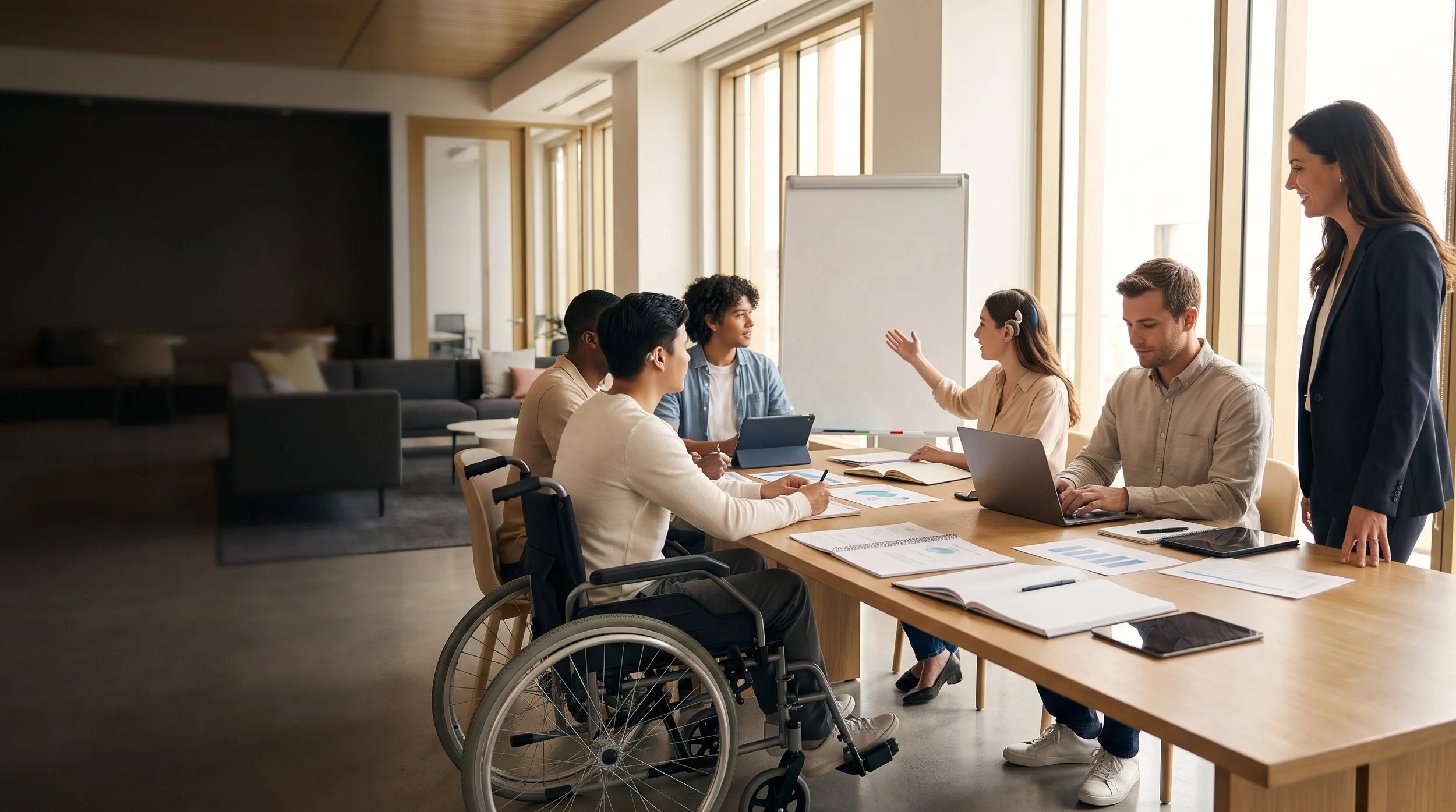
Pathways to Independence is being designed for individuals with disabilities age 16 and older who may benefit from additional opportunities to develop and practice skills connected to everyday life, self-advocacy, employment readiness, technology, community participation, and greater independence.
We recognize that disability includes a wide range of experiences, abilities, strengths, goals, and support needs.
Participants may include people with physical, intellectual, developmental, learning, sensory, neurological, or other disabilities who can reasonably benefit from the program.
Different abilities. Different goals. Different paths.
There is no single picture of what progress should look like.

WHAT PARTICIPANTS CAN EXPLORE
Skills That Connect to Everyday Life
Pathways is designed around practical areas that can influence everyday choices, participation, confidence, and future goals.
Core Skill Areas

Self-Advocacy & Decision-Making
Participants can explore how to communicate needs, make choices, understand boundaries and supports, ask questions, and speak up for themselves.

Home & Daily Living
Activities may address organization, routines, household responsibilities, planning, problem-solving, and other skills connected to everyday living.

Employment Readiness
Activities may include exploring interests and strengths, workplace expectations, communication, job-search preparation, interviewing, professionalism, and skills that can support future employment goals.

Money & Banking
Practical learning may include budgeting, spending decisions, banking basics, paying bills, understanding needs versus wants, and recognizing financial risks and scams.

Transportation & Community Navigation
Participants may build knowledge and confidence around planning trips, understanding transportation options, navigating the community, asking for assistance, and making safe travel decisions.

Communication & Relationships
Participants can explore communication, boundaries, healthy interactions, asking for help, resolving everyday challenges, and building positive relationships.

Food & Grocery Independence
Participants may explore meal planning, grocery shopping, comparing prices, making choices, basic food preparation, and other practical food-related skills.

Digital Independence
Participants can strengthen practical technology skills, including using digital tools, communicating online, finding information, protecting personal information, and recognizing potential online risks.

Community Participation
Participants will have opportunities, when appropriate, to connect learning with community-based experiences that encourage participation, confidence, decision-making, and practical application.
HOW PATHWAYS WORKS
12 Weeks. Practical Learning. Real-Life Connections.
Pathways is planned as a 12-week program that moves participants from learning and exploration toward practice and application.
My Goals & My Pathway
Welcome, individual goals, strengths, interests, and the beginning of each participant's My Pathway Plan.
Speaking Up & Making Choices
Self-advocacy, decision-making, boundaries, rights, and understanding supports.
Money & Banking
Money basics, banking, budgeting, and making informed financial choices.
Spending, Bills & Financial Safety
Everyday spending, bills, financial responsibility, scams, and protecting personal information.
Food & Grocery Skills
Planning, shopping, comparing options, making choices, and practical food-related skills.
Home & Everyday Life
Routines, organization, household responsibilities, planning, and problem-solving.
Getting Around
Transportation, trip planning, community navigation, safety, and asking for assistance when needed.
Digital Independence
Using technology, accessing information, communicating online, privacy, and digital safety.
Getting Ready for Work
Strengths and interests, workplace expectations, preparation, communication, and employment readiness.
Communication & Relationships
Communication, boundaries, healthy interactions, problem-solving, and asking for support.
Independence in Action
Opportunities to practice and connect multiple skills through meaningful activities and real-life situations.
My Next Step
Reflection, recognizing progress, reviewing the My Pathway Plan, and identifying meaningful next steps.
Learn It. Practice It. Use It.
OUR SIGNATURE APPROACH
Pathways is designed to help connect learning with experience.
LEARN IT.
Understand the skill, explore why it matters, ask questions, and build knowledge.

PRACTICE IT.
Try the skill in a supportive environment, make choices, solve problems, and build confidence through experience.
USE IT.
Connect the skill to everyday situations, community experiences, and individual goals.
We want participants to have opportunities to move beyond:
“I learned about it.”
toward:
“I practiced it.”
and ultimately:
“I know how I can use it.”
MY PATHWAY PLAN
Your Goals Belong in the Program.
Every participant's goals may be different.
That is why Pathways will incorporate a personalized My Pathway Plan.
At the beginning of the program, participants will have opportunities to think about their strengths, interests, areas they would like to develop, and goals that matter to them.
Throughout Pathways, participants can reflect on what they are learning and practicing.
At the end of the program, they can look back at their progress and identify meaningful next steps.
Because your pathway should reflect where you want to go.
My Strengths
What I bring. What I’m good at.
My Goals
What I want to work toward.
What I’m Practicing
Building skills. Gaining experience.
My Next Step
What’s possible ahead.
Real Life Is Part
of the Classroom
LEARNING BEYOND FOUR WALLS
Some skills are easier to understand when they can be connected to the places and situations where people may actually use them.
When appropriate and resources allow, Pathways may incorporate community-based learning experiences that connect program lessons with everyday life.
That might include opportunities related to:
Shopping and budgeting.
Transportation and trip planning.
Technology.
Community resources.
Employment and workplace exposure.
Communication and self-advocacy.
Other practical activities connected to participant goals.
These experiences are intended to help participants make connections between what they learn and how they may use it.

Progress Is Personal
WHAT PROGRESS CAN LOOK LIKE
We are not building Pathways around the idea that every participant should leave with the same outcome.
Feeling more confident asking a question.
Understanding a bank statement better.
Planning a trip.
Recognizing an online scam.
Preparing for a job interview.
Making a grocery list and comparing prices.
Speaking up about a preference or need.
Using a new technology skill.
Identifying the next step toward a personal goal.
Small steps can be meaningful steps.
Pathways is designed to recognize growth while respecting each participant's individual goals, abilities, choices, and support needs.
COMPLETING THE PATHWAY
Recognizing the Journey
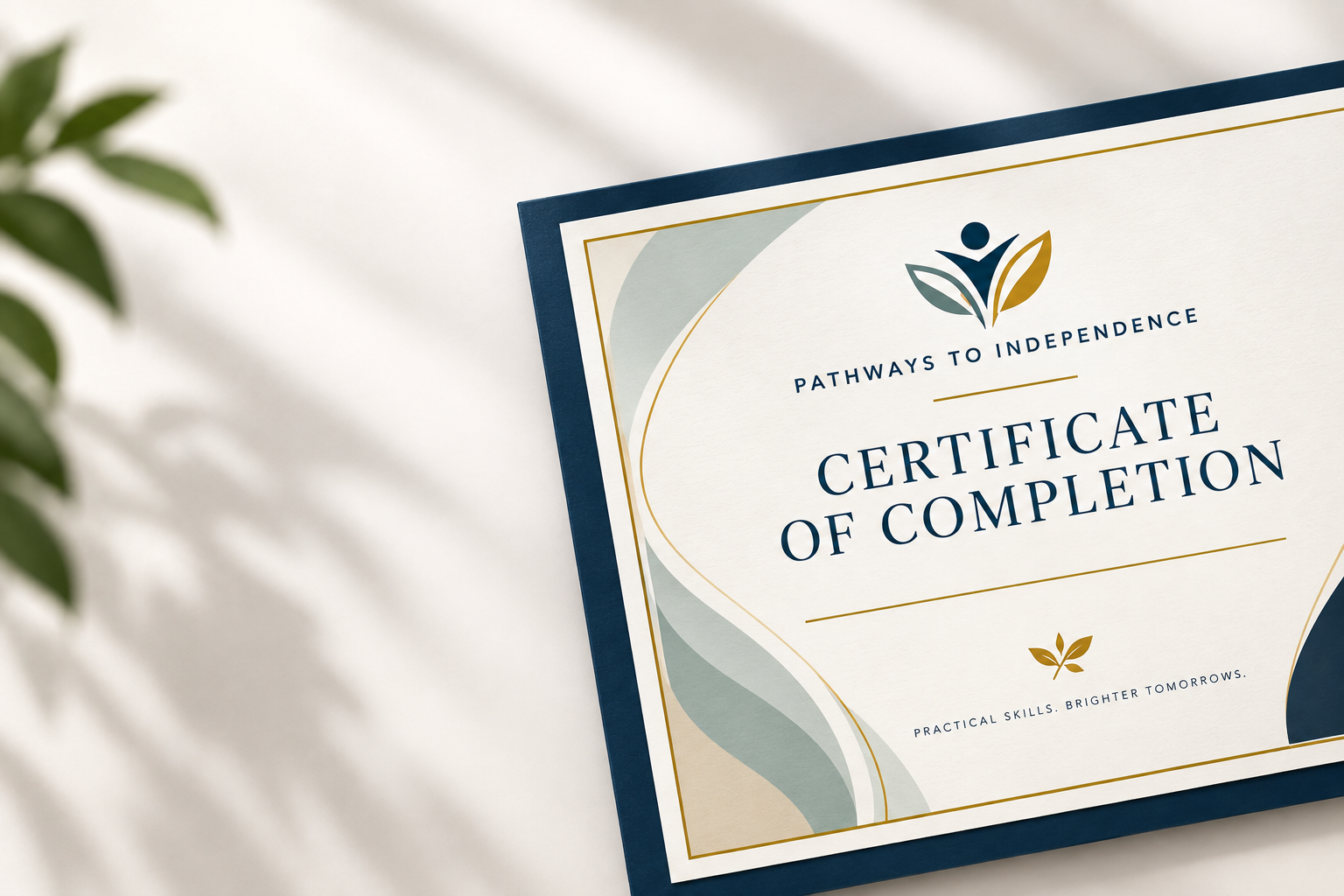
Participants who complete Pathways to Independence may receive a Certificate of Completion recognizing their participation in the program.
The certificate celebrates completion and effort it is not an academic degree, professional credential, employment certification, license, or guarantee of employment.
More importantly, participants will have an opportunity to leave the program with their My Pathway Plan, reflections on what they practiced, and ideas about the next steps they want to pursue.
Supporting Growth Without Defining It for Someone Else
FOR FAMILIES & SUPPORTERS
We help turn opportunity into practical pathways toward greater independence.
Families, caregivers, and other trusted supporters can play an important role in encouraging growth.
At the same time, Pathways is centered on the participant.
Whenever appropriate, we want participants to have meaningful opportunities to express their preferences, identify goals, make choices, practice self-advocacy, and participate in decisions that affect them.
Our goal is not to tell someone what their independence should look like.
Our goal is to help create opportunities for them to explore what is possible.

FOR COMMUNITY PARTNERS
Help Bring Learning to Life
Strong community connections can create opportunities that no classroom can provide on its own.
Versatility Care Foundation welcomes conversations with mission-aligned organizations, professionals, businesses, and community leaders interested in contributing resources, knowledge, expertise, experiences, or other forms of support.
Potential collaboration may include:
Participant Referrals
Workshops & Guest Instruction
Technology Resources
Sponsorship & Program Support
Professional Expertise
Accessible Program Space
Community-learning experiences
Employment-readiness opportunities
Resource Connection
SUPPORT PATHWAYS
Help Turn Learning Into Opportunity
A meaningful program requires more than a curriculum.
It takes skilled people, accessible resources, technology, materials, safe learning environments, transportation support, community experiences, and people willing to invest in possibility.
Support for Pathways can help the Foundation build the resources and experiences needed to bring practical learning to life.
When you support Pathways, you help us build opportunities for people to learn, practice, participate, and grow.
INTERESTED IN PATHWAYS?
Take the First Step
Are you interested in Pathways to Independence for yourself, a family member, or someone you support?
We would like to hear from you.
Because the program is being developed, submitting an interest form should not be described as enrollment, acceptance, registration, or a guarantee of placement.

YOUR NEXT STEP
Your Next Step Can Start With an Opportunity.
Learning something new can open a door.
Practicing it can build confidence.
Using it can help turn possibility into action.
Learn It. Practice It. Use It.
Pathways to Independence